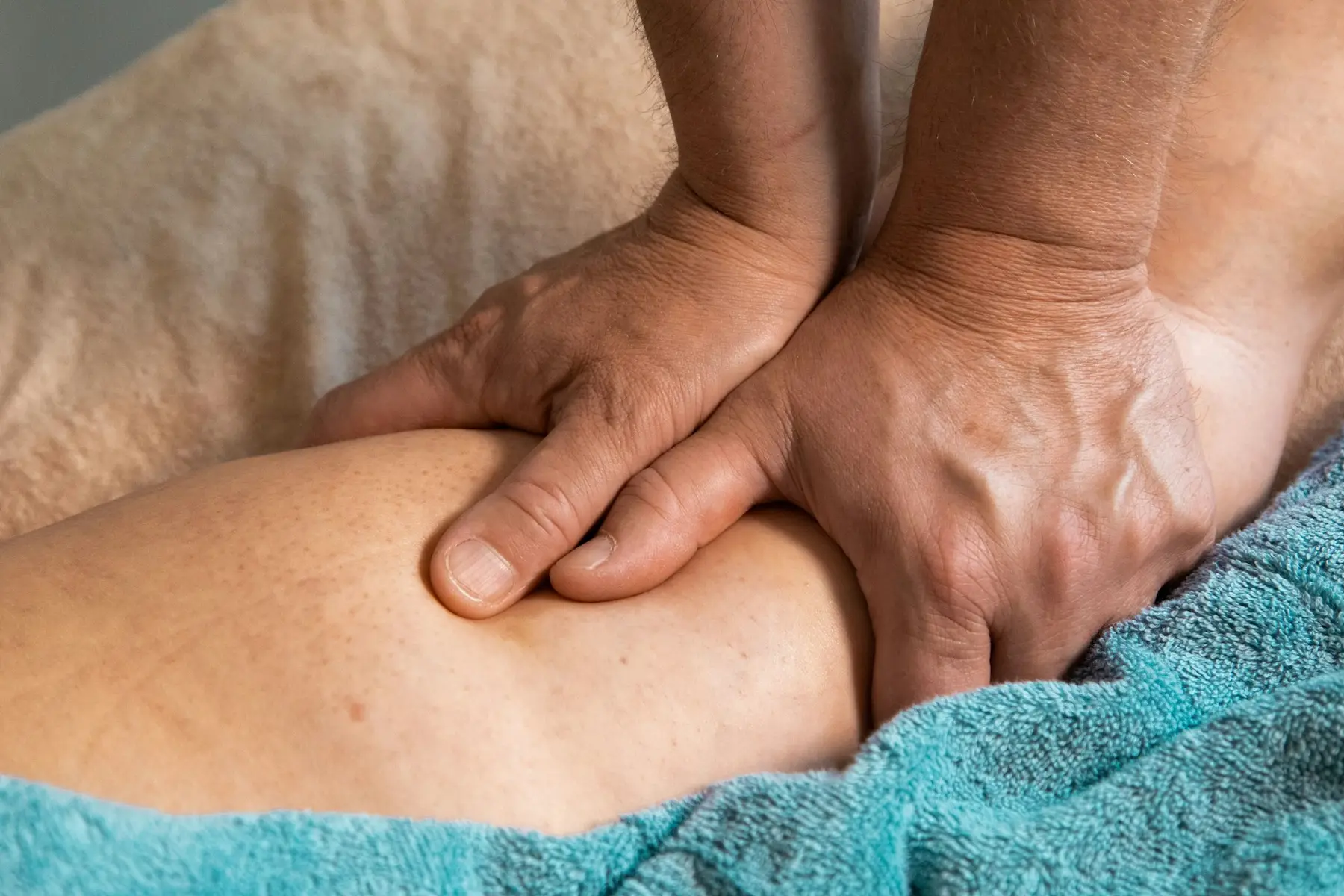
Injury-specific, or preparation for athletes Worked to the injury,
Injury-specific, or preparation for athletes. That is Jonathan’s own description, and the useful half of it is the first one. The session is pointed at one thing: the tissue that has stopped doing its job, and the movement that put it in that state.
Which makes it as much assessment as treatment. What gets worked is decided in the room, from what he finds and what you tell him, which is why an hour spent on one shoulder is a normal outcome here, and a full-body routine is not.
If nothing is injured and nothing is coming up, deep tissue is usually the more useful hour: same lengths, same price, a different intent.
Why the two cost the same →High level sports massage. Highly recommend. Jonathan is very knowledgeable and understands what the body needs to aid recovery.
Fantastic experience with J. I've had a lot of sports massage and this was top tier. Great service all round.
The same treatment pointed at two different problems. Which one you are booking changes the hour more than the length does.
Three to five days out. Forty-eight hours is the floor, and the day before is light work only.
Brisker, broader, shallower. The aim is a body that moves freely on the day, so nothing is worked deep enough to leave tissue sore or reactive: you want to feel nothing on the day, which means the deep work happens early enough to settle.
Where this sits in a marathon block →As soon as it is not acutely swollen.
Slower, narrower, assessment-led. Sustained pressure through one structure, and then everything up and down the chain that has been compensating for it, because what hurts and what caused it are rarely the same thing.
Which of the two it is changes the hour more than the length does, so it is the first thing worth saying when you get in touch.
Say which of the two it is →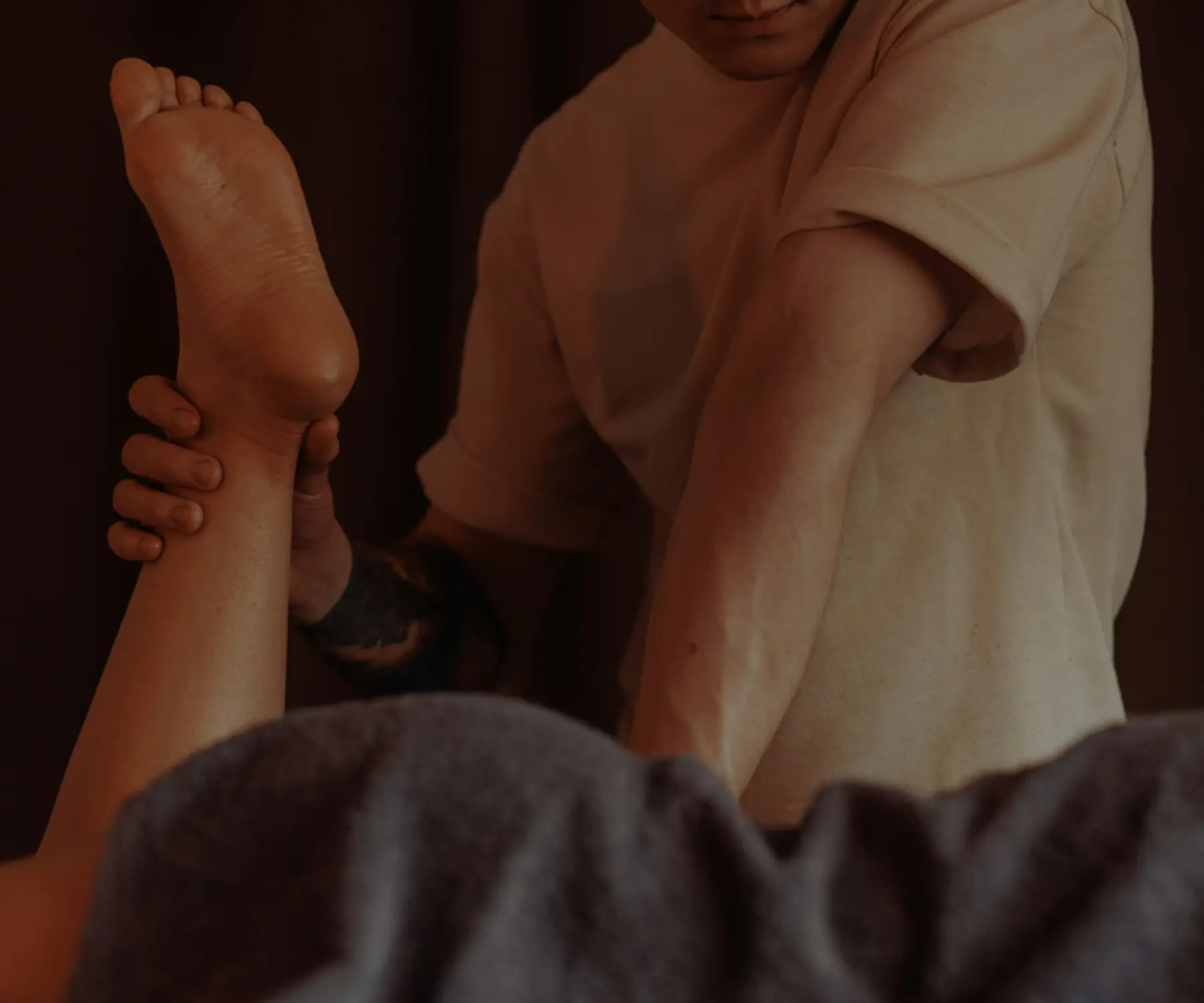
Pick what is actually sore. It gets walked backwards (what is loaded, then what put it there) because the tissue that hurts is usually the one paying for something further up.
Pick one above and the chain fills in backwards, from where it hurts to what put it there.
These are patterns, not a diagnosis of your body. Which of them is true of you (if any is) is what the first session is for, and anything needing a scan or a prescription gets pointed at the right person rather than worked around.
The structures above and below the joint get worked first, then how the knee tracks is reassessed.
Hips and glutes get assessed first, then the lumbar region is released and the real driver addressed.
Assessment of the whole upper chain, then targeted soft tissue work through the neck and upper back.
Soft tissue through the hamstring group and glutes, with a sensible return-to-load plan.
Deep work through the calf complex and Achilles, alongside ankle mobility.
Work into the rotator cuff, chest and upper back to restore range before anything gets loaded again.
The same three steps whichever session you book. There is one therapist, so there is one way this goes.
The intro call is complimentary and it is the fastest way to find out whether this is the right thing at all. If it is not, he will say so, the same way a session that needs a diagnosis, a scan or a prescription gets pointed at the right person rather than worked around.
Shorts, and a vest or t-shirt if the problem is in the upper body; come as you would to train. The session is one-to-one with Jonathan for its full length; there is no team and no handover.
What he is working towards is the injury and the movement behind it, so expect to be asked what you were doing when it started.
Whether one session is enough is not something either of you can know before it starts. Something that has been there for years usually takes three to six (weekly at first, then spaced out as it holds), and you will get a straight answer about which of those you are looking at at the end of the first session, not as a package sold up front.
Prices are per session and are the same whoever you see, because there is only one person to see. The wider therapies Jonathan offers are arranged by enquiry.
Both lengths are the same hands and the same room: the longer one is more of the session, not a different one. If you are not sure, book the sixty and say so on the call.
Book sports massageNot sure which of these you need? That is what the first session is for, or start from the situation instead: something already hurts, or nothing hurts yet.
Three to five days out is the window. Forty-eight hours is the floor, and the day before an event is light work only: anything deep enough to be worth doing is deep enough to want a day or two to settle.
It is firm, and there are moments in a session you will feel. It should never be something you have to brace through: the pressure is worked to what you can breathe through, and Jonathan adjusts as he goes.
No. Working that out is half of what the hour is for, which is why it is as much assessment as treatment. If it turns out to need a diagnosis, a scan or a prescription, he will say so and point you at the right person rather than work around it.