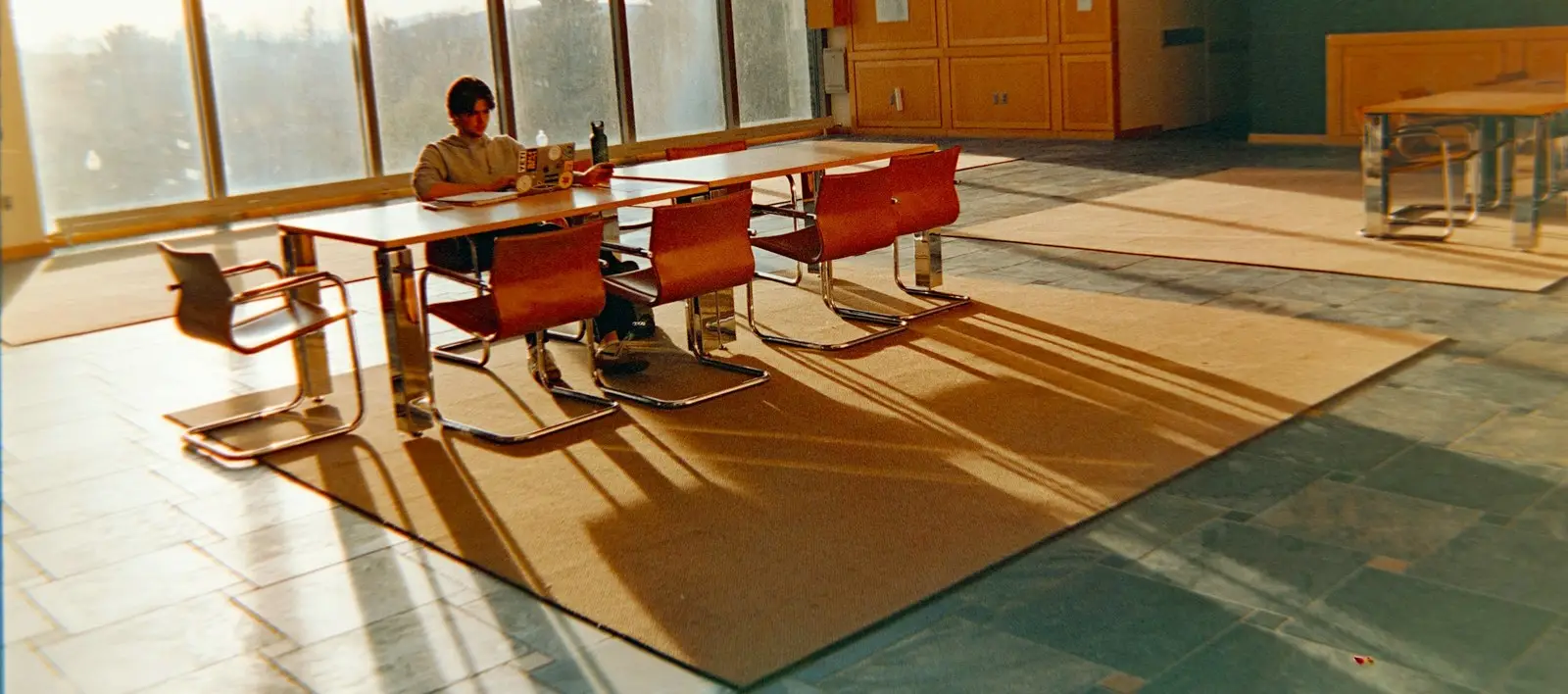
The desk, the neck,
and the same shoulder
It did not arrive on a particular day. It goes on holiday with you, comes back by the Wednesday, and is never quite today's problem.
It did not arrive on a particular day. It goes on holiday with you, comes back by the Wednesday, and is never quite today's problem.
Tick whatever is true. It is not a test and there is no number at the end: the answer is which areas your week keeps loading, and what that means for how often you are back.
Those lines are the Edge Diagnostic's, unchanged: find it on the body.
Nothing done in an hour stops you sitting for eight hours a day. The sitting is the cause and it is not going anywhere, so what a session takes off, the following week puts back on. That is why the people who sit like this settle into a rhythm instead of booking one session at a time.
Monthly, mostly. It usually starts after something flares up and settles into a rhythm once it stops flaring. Desk all day, on the RhythmWhat a standing slot is, and how you get one
Nothing done in an hour stops you sitting for eight hours a day. The sitting is the cause and it is not going anywhere, so what a session takes off, the following week puts back on. That is why the people who sit like this settle into a rhythm instead of booking one session at a time.
Monthly, mostly. It usually starts after something flares up and settles into a rhythm once it stops flaring. Desk all day, on the RhythmWhat a standing slot is, and how you get one
Most people who come here can name the moment. A tackle, a lift that went wrong, the mile the calf went. The history is an event, and the first question of a first session is some version of what happened.
That question does not work for this. Nothing happened. What there is instead is a Tuesday, repeated. So you have probably already answered it, by deciding it has been a while and leaving it there. And it is one shoulder, not both, and you already know which.
And the boundary is the same here as everywhere else on this site: if it turns out to need a diagnosis, a scan or a prescription, Jonathan will say so and point you to the person who can, rather than work around it.
Jonathan is amazing. I’ve been managing shoulder pain for a few years and finally feel like I’m making progress in the past few months after starting treatment with him. He has great knowledge and techniques. Don’t think twice.
Review 01 of 03
Partly, and the honest answer is that nobody can tell you that without seeing it. What the panel above describes is a load: hours in one position, and what tends to carry it. Whether your particular shoulder is carrying it the way most do is the thing an hour in the room is for.
They matter, and they are not the whole of it. If a new chair had been going to fix it, it would have fixed it in the first fortnight. That is worth knowing before you buy another one.
Stretching is not nothing and it is free, so it is a reasonable place to start. What it tends not to survive is the following Monday. If a few weeks of it has already not shifted this, that is useful information rather than a sign you did it wrong.
Possibly, and Jonathan is the one who will say so. He is not a physiotherapist, and this is soft tissue work, one-to-one. If what you have turns out to need a diagnosis, a scan or a prescription, he will tell you and point you at the right person rather than keep you on the table.
Usually both, and the combination is the part people underestimate: a shoulder that has been held still since nine does not arrive at the gym neutral. It is one of the things worth saying out loud in the first ten minutes.
It does come back, and the panel above says why: nothing here changes the hours you sit. What that means for how often people actually return is what the foot of this is about.
You can book the first one without knowing which of the areas above is carrying it. Finding out which is the first thing that happens.
Book a sessionSomething that has been there for years usually takes three to six sessions: weekly at first, then spaced out as it holds. Somewhere in that, the thing you came in with stops being the thing you think about.
What nobody tells you is what happens at the end of it, and it is worth saying plainly, because there are only two things people actually do.
Most people do, and it is a perfectly reasonable end to it.
The work has done what it was going to do and you get on with your life. Nobody will chase you, there is nothing to cancel, and you are not on a list. If something else goes in two years you know where he is.
Monthly, mostly. It usually starts after something flares up and settles into a rhythm once it stops flaring.
Not four sessions a month, and not a plan written in advance: a time that stays in the diary, so it is one fewer decision to make. That is what a standing slot is, and there are three shapes of it depending on whether you have a season, a date, or neither.
Which of those is yours is not a thing to decide off a page. It is a conversation at the end of a session, with somebody who has just had his hands on it, the same honest view you would get at the end of a first session, and for the same reason.
The nine patterns on the maintenance page are what other people actually settled into, each with the person who settled into it saying so.
See what the rhythms look like →Or start from the situation rather than the sport: something already hurts, or nothing hurts yet.