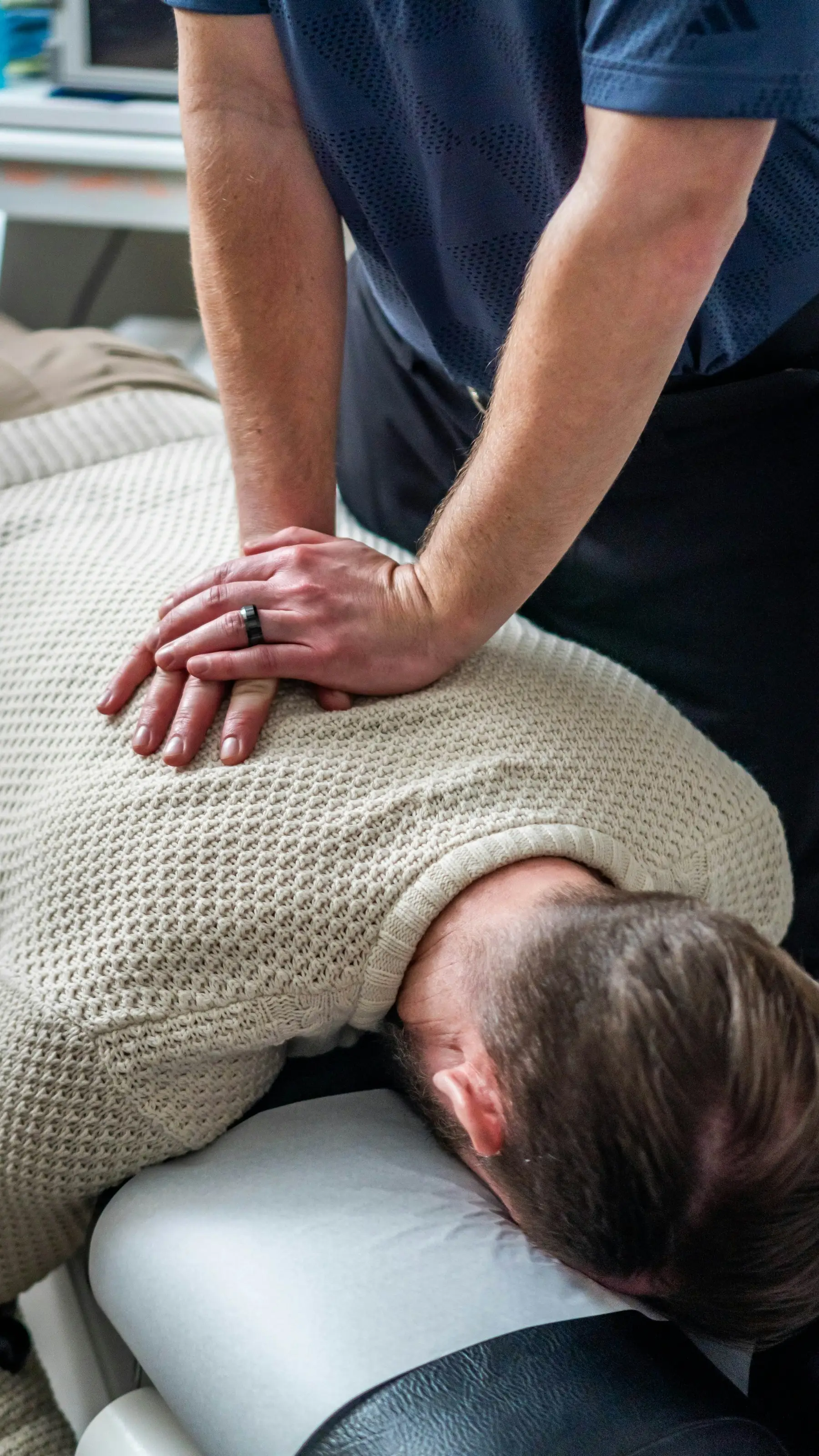
Neck, back and shoulders Thirty minutes,
The short session, and the only one on the menu that names a region. Half an hour worked into one problem area (the neck, the upper back, a shoulder) rather than spread thin across all three.
It is the most common way in, and the region is not an accident: the neck and upper back are the single most frequent complaint in the review set. Thirty minutes on one of them is a real piece of work rather than a sample of a longer session.
If the problem moves around, or there are two of them, the hour exists for a reason. He will tell you at the end which of those you are looking at.
Very knowledgeable and did a great job relieving my shoulder pain. Highly recommended.
He quickly identified the cause of the problem and after only 3 sessions I am finally feeling freedom again in that part of my spine.

The constraint is the product here, so here is the whole of it. Twenty-two of the thirty are hands on you. Choose what they go on.
What you were doing when it started, and a quick look at how it moves.
The work itself, in the neck, the upper back or a shoulder: one of them, not all three.
The thing that hurt at the start, re-checked, and one thing to do about it before the next one.
You are picking where to start, not making the diagnosis. The minutes at the top of the bar are what settle whether that is the right place to be spending the rest, and if it is not, he will say so.
Desk posture, screen height and sleep position. Often referred from the upper back rather than the neck itself.
Assessment of the whole upper chain, then targeted soft tissue work through the neck and upper back.
Sustained desk posture and shallow breathing pattern. Usually presents as tightness between the shoulder blades.
Deep tissue through the thoracic spine and rib cage, with the mobility work that holds the change.
Overhead load from racquet sport and gym volume, or long hours held in a fixed desk position.
Work into the rotator cuff, chest and upper back to restore range before anything gets loaded again.
The same three steps whichever session you book. There is one therapist, so there is one way this goes.
The intro call is complimentary and it is the fastest way to find out whether this is the right thing at all. If it is not, he will say so, the same way a session that needs a diagnosis, a scan or a prescription gets pointed at the right person rather than worked around.
Shorts, and a vest or t-shirt if the problem is in the upper body; come as you would to train. The session is one-to-one with Jonathan for its full length; there is no team and no handover.
Thirty minutes is one area, so the useful version of the question at the door is which one, not everything that aches.
Whether one session is enough is not something either of you can know before it starts. Something that has been there for years usually takes three to six (weekly at first, then spaced out as it holds), and you will get a straight answer about which of those you are looking at at the end of the first session, not as a package sold up front.
Prices are per session and are the same whoever you see, because there is only one person to see. The wider therapies Jonathan offers are arranged by enquiry.
One length, one focus. If the problem turns out to be bigger than half an hour, Jonathan will say so rather than sell you the rest of it.
Book 30 minutesNot sure which of these you need? That is what the first session is for, or start from the situation instead: something already hurts, or nothing hurts yet.
Twenty-two of the thirty are hands on you; the other eight are finding the area at the start and re-checking the movement at the end. It is short because it is pointed at one thing, not because it is a sample of something longer.
No, and spreading it across the whole back is what would make it a sample. One area, worked properly. If the problem moves around, or there are two of them, the hour exists for a reason.
Then it gets changed in the room. You are picking where to start, not making the diagnosis: the first few minutes are what settle whether that is the right place to be spending the time, and he will say so if it is not.