
Where the bar stops,
and what is holding it
The warm-up sets were fine and the working set was not. The largest review of the trials found no effect on strength.
The warm-up sets were fine and the working set was not. The largest review of the trials found no effect on strength.
Everybody who trains reads soreness as the receipt: the session landed, something was broken down, recovery is owed. The measurements do not hold that up.
A hundred and ten people did maximal eccentric work at twelve repetitions, twenty-four, or sixty. The heavier two doses did significantly more to every marker of muscle damage than the lightest, and the soreness did not differ between them at all: five times the work, the same ache. It is also why the practice is careful about what it claims: the biggest review in the field, twenty-nine studies and a thousand and twelve people, found no evidence that massage improves strength, jump, sprint, endurance or fatigue.
And the boundary is the same here as everywhere else on this site: if it turns out to need a diagnosis, a scan or a prescription, Jonathan will say so and point you to the person who can, rather than work around it.
Six places a lift goes wrong, and three explanations for each. Three of the six answers point somewhere other than this room.
Try the free things first. If depth is still the thing that will not move, this is the row where an hour has something specific to look at.
→Where a lift stops is worth more to the hour than where it aches. Arrive with the lift named and none of the first session goes on finding it.
Say where the squat stops →One lands on programming, two on technique, and only the remaining three anywhere a pair of hands can reach. Most stalled lifts are a training problem, a good number are a movement problem, and a minority are a length problem.
Progressive overload is not a side effect of training, it is the mechanism. A standing arrangement puts hands on the accumulating half at the rhythm the training already runs at.
People lifting consistently tend to come round about once a month, and more often through a heavy block. The Rhythm: gym and strengthWhat a standing arrangement looks like
Take the commonest one, which is a squat that stops above parallel. Getting to parallel with the torso upright asks the shin to travel forward over a foot that is not moving. That is dorsiflexion under load, and it is usually the range that runs out first.
Try the free things first. If depth is still the thing that will not move, this is the row where an hour has something specific to look at.
One lands on programming, two on technique, and only the remaining three anywhere a pair of hands can reach. Most stalled lifts are a training problem, a good number are a movement problem, and a minority are a length problem.
Progressive overload is not a side effect of training, it is the mechanism. A standing arrangement puts hands on the accumulating half at the rhythm the training already runs at.
People lifting consistently tend to come round about once a month, and more often through a heavy block. The Rhythm: gym and strengthWhat a standing arrangement looks like
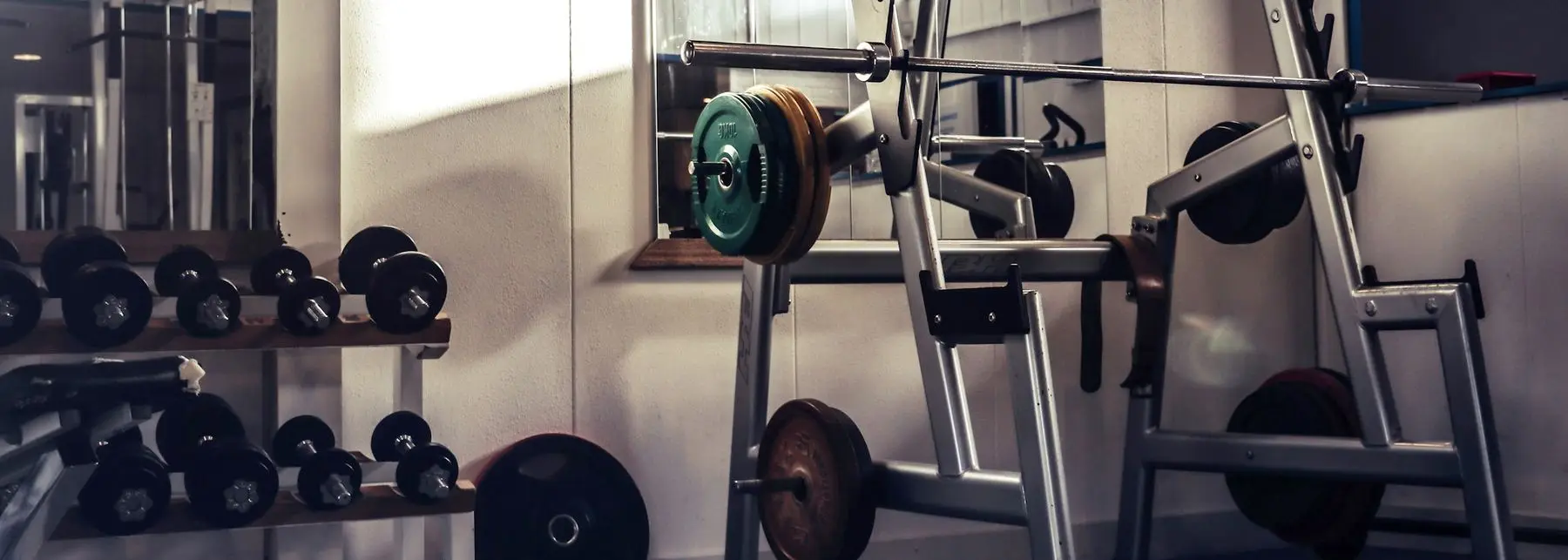
The other three answer to your coach or your programme. If yours is a length problem, an hour has something specific to look at.
Book a sessionRange and how things feel, and an honest read on which of those is actually in your way. The trials are clear that the hour does not add force, and that is said plainly rather than left to the small print. What is left is narrower than the sales version and easier to check: a shoulder that reaches where it used to, a hip that is not the reason the bar path changed, and somebody who will tell you when the answer is not soft tissue at all.
It is a common reading and it is not supported. When a hundred and ten people did twelve, twenty-four or sixty maximal eccentric repetitions, the heavier doses did measurably more to every marker of muscle damage and produced no more soreness than the lightest one. Soreness varies with how unaccustomed the movement was far more than with how much work you did. It is a real sensation and a poor instrument.
Descriptively rather than prescriptively, because a schedule is a decision about a body nobody here has looked at. The cadence the practice actually sees is quoted on the Rhythm, in its own words, and it is a description of what other people do rather than a recommendation for you. What suits your block is a conversation, and it is one Jonathan would rather have after an hour than before one.
Nothing has to be wrong, and this is the maintenance side of the practice rather than the injury side: there are two doors in and it is the second one. The one caution worth stating: if what you actually mean is that you are tired in a way that sleep is not fixing, that is a bigger question than an hour on a table and it is worth saying out loud when you book.
Possibly not, and Jonathan is the one who will say so rather than find out at your expense. He is not a physiotherapist and this is soft tissue work, one-to-one. Tightness at the end of a range is the sort of thing an hour is pointed at. Pain that clicks, catches, gives way or wakes you up is not, and if that is what you have, he will tell you and point you at the right person instead of keeping you on the table.
The first one is for finding out which of the three it is. Being told it is the programming, by somebody with no reason to say so, is worth an hour on its own.
Book a sessionOr start from the situation rather than the sport: something already hurts, or nothing hurts yet.