Vital Edge

Tennis elbow, and what
is actually in there

It was never an inflammation, which is why the ice, the anti-inflammatories and the strap have not shifted it. What is in there is muscle, and muscle is the part anybody's hands can reach.
What has been measured

There is nothing
in there to calm down

Every clinic offers to sort your tennis elbow out, and you have probably been round the houses already: a strap, ibuprofen, six weeks off. It is worth knowing what was found when somebody looked at the tissue itself.

More than six hundred cases have been examined under a microscope, and the inflammation everybody expected was not there: disorganised, immature collagen, and no inflammatory cells at all. The -itis on the end of the name has been wrong for decades. Which accounts for everything on that list above: all of it aimed at a process that is not happening, all of it taking the edge off until the first hard set brings it back.

The part the sales pages leave out is what happened when the injection was tested: over a year, in a trial of a hundred and sixty-five, it finished behind salt water: eighty-three per cent recovered against ninety-six, and fifty-four per cent recurrence against twelve. And the same trials are equally clear that hands-on work has not been shown to change where anybody is at twelve months either. So there is no fast fix on offer here. What there is: nothing in there to calm down, and muscle that can be reached (the extensors on the outside of the elbow, the flexors on the inside) across months you have to keep playing through.

Histopathology from Nirschl's series, reported in Journal of Orthopaedic & Sports Physical Therapy, 2005; the one-year injection figures from Coombes et al., JAMA, 2013; the twelve-month comparison from the watchful-waiting trials of Smidt et al. and Bisset et al.

And the boundary is the same here as everywhere else on this site: if it turns out to need a diagnosis, a scan or a prescription, Jonathan will say so and point you to the person who can, rather than work around it.

The Swing

Every shot loads
a different part of you

Four strokes, and they do not land in the same place. Pick the one that aches afterwards. There is no score at the end of it, and nothing here is a diagnosis. It is what the movement does to tissue.

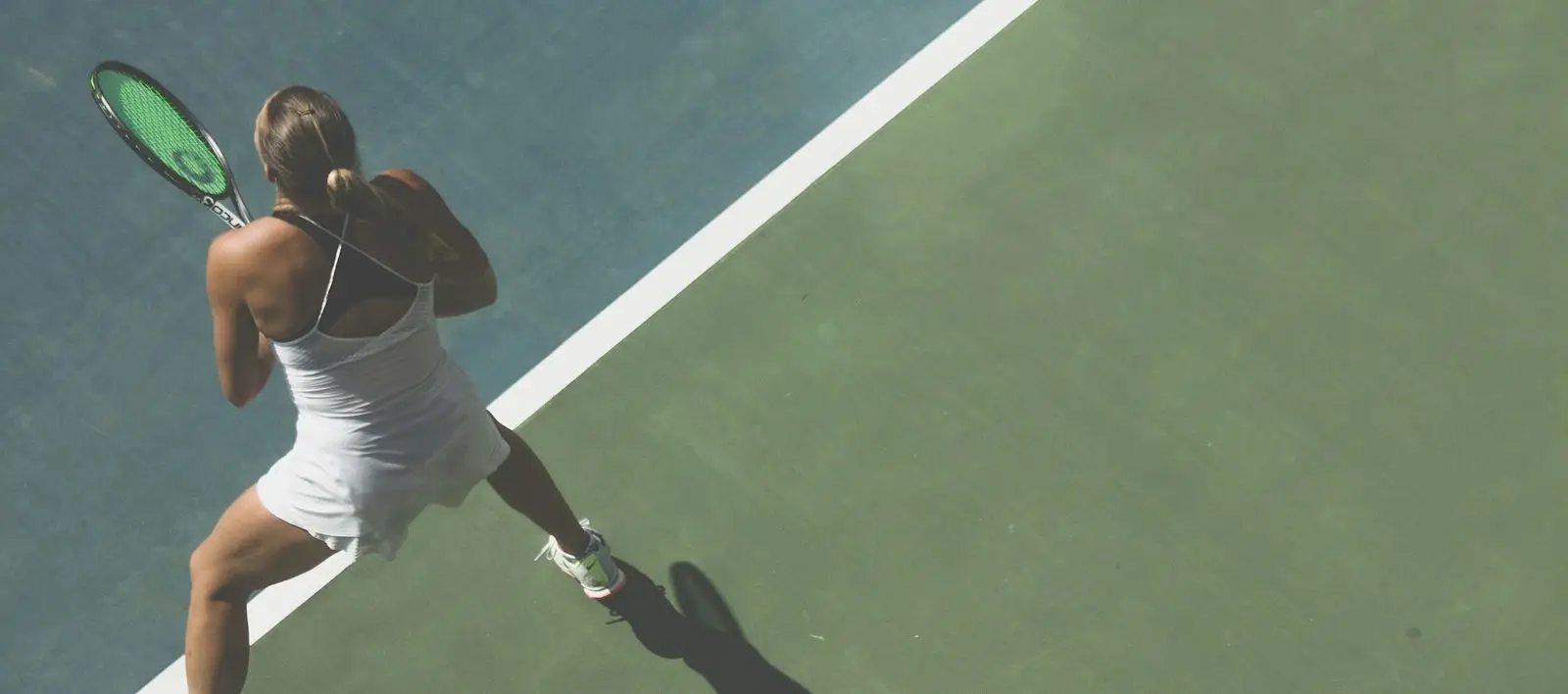
Take the backhand, which is the stroke the sport's own name comes from. The wrist extensors start at the outside of the elbow and run down into the back of the hand, and on a backhand their job is to hold the wrist still, not to swing it, but to stop the ball folding it back. That is a bracing job, done under load, a few hundred times an afternoon. It is where the sport's own name comes from.

And it only happens on one side
Racquet arm
Braced at contact. The extensors are holding a position against the ball rather than producing the shot, which is the most demanding thing you can ask of a muscle that short.
The other arm
Almost nothing. On a single-hander it is a counterweight, and that is the whole of its afternoon.
Around half of players over thirty

Close to half of recreational players aged thirty and over report symptoms at the outside of the elbow at some point. Across a whole playing life, forty to fifty per cent of racquet players are given the diagnosis.

Figures from the review literature on racquet sport; see the evidence note.

Two figures that disagree with each other

Only five to ten per cent of the people who get told they have tennis elbow play tennis: plumbers, decorators and anyone whose grip works all day make up most of it, and the name has misled two generations. But among racquet players themselves it is close to a coin flip across a playing life. Both of those are true at once, and a page that gave you only the second one would be selling you something.

Nobody is asking you to stop playing

Which is the whole difficulty, because the load and the season are the same thing. What a standing arrangement does is put hands on it at the rhythm the sport already runs at, instead of waiting for the match where it stops being something you can play through.

The same shape as any seasonal sport: weekly while you are playing competitively, further apart between seasons. The Rhythm: racquet sport
What a standing arrangement looks like
He knew every single muscle - knew the issues immediately. 60 minutes on just my right shoulder and arm.. Unbelievable THE best.
Julie Montagu· Read review on Google
Say which you noticed first
Answered elsewhere

Three questions this page
hands over

Before you book

Questions players ask

Should I stop taking anti-inflammatories for it, then?

That is a question for whoever put you on them, not for anybody here, and nothing here is a reason to stop anything. What the microscope work says is only that the mechanism is not the one on the tin: there is no inflammation there to reduce, whatever the tablets are doing about the pain. If weeks of them have not shifted this, that is useful information rather than a sign you were doing it wrong.

Isn't this really a racquet or a grip problem?

It might be, and that is worth saying plainly: grip size, string tension and racquet stiffness all come up in every serious account of this, and there is an active research literature on frame stiffness specifically. Jonathan does not fit racquets or string them and will not pretend to. If your kit is the thing, the person to see is a stringer or a coach. What happens in the room here is the soft tissue that your kit has been loading.

I play padel, not tennis. Does any of this apply?

Most of it, and in one respect more of it. The mechanics are the same (one arm, held rigid at contact, several hundred times a session), and the sport's name is a historical accident rather than a description of who gets this, which is the first of the two figures on the panel above. Padel adds something too: the walls keep the ball alive, so there are a great many more overheads in an hour of it than there are serves in an hour of tennis.

My other arm is fine. Why would you work on it?

Usually not much would happen there, and that is rather the point: the panel above shows the two sides beside each other because on the racquet side the difference is measurable. Eighty-seven per cent of professional players show less rotation available at the racquet shoulder than at the other one. What that means practically is that the unloaded arm is the reference for the loaded one, not a second thing to work on.

How long is this actually going to take?

Longer than anybody selling it will tell you. The honest answer from the literature is months rather than weeks, sometimes considerably longer, and it comes back often enough that recurrence is treated as normal rather than as a failure. Nothing here changes that timeline and nobody is claiming otherwise; what a standing arrangement is for is the months in between, which are the ones you have to keep playing through.

Should I be seeing somebody medical instead?

Possibly, and Jonathan is the one who will say so. He is not a physiotherapist, and this is soft tissue work, one-to-one. If what you have turns out to need a diagnosis, a scan or a prescription, he will tell you and point you at the right person rather than keep you on the table.

Elbow, shoulder or kit. One of those three ends with a stringer's number rather than a second appointment, and finding out which you have is what the hour buys.

Book a session

Elsewhere

If it is not quite this

Or start from the situation rather than the sport: something already hurts, or nothing hurts yet.

Book