



Keep your
edge
edge
Hands down the best! And that’s coming from a doctor!
Same hands either way. Pick the one that sounds like you. If you pick wrong, it doesn't matter: the other is one click away.

It has been there for months. Rest has not fixed it, and you have stopped expecting it to.
Find the cause
Nothing is wrong yet. You’d like to keep it that way, without guessing.
Find the rhythmMost people know something's wrong, but not what it's called. Point at it instead: eleven areas of the body, and what Jonathan actually does for each one.
Book a session
Desk posture, screen height and how you sleep. It often starts in the upper back, not the neck itself.
He checks your neck, shoulders and upper back together, then works on the neck and upper back.
Overhead work in racquet sports and the gym, or long hours held still at a desk.
Work on the rotator cuff, chest and upper back to free up movement before you load it again.
Long hours at a desk and shallow breathing. Usually felt as tightness between the shoulder blades.
Deep tissue work around the mid-back and ribs, plus mobility exercises to help it last.
Long hours sitting, lifting technique and stiff hips. The back is usually where you feel it, not the cause.
He checks your hips and glutes first, then works on the lower back and whatever is really causing it.
Lots of running or cycling, or the opposite: long hours sitting with your hips bent.
Work on the front of the hip and the glutes, looking at how your hip actually moves when you walk or run.
Underused from sitting, then overloaded in training. A common cause of both lower back and hamstring problems.
Focused glute and deep hip work, plus things to do between sessions.
Heavy training, hill work and not enough recovery between hard sessions.
Deep tissue work on the thigh and the front of the hip, with advice on managing your training.
Sprinting and quick changes of direction, usually on top of stiff hips.
Work on the hamstrings and glutes, with a sensible plan for getting back to full training.
Rarely the knee itself. The strain usually comes from the hip, the thigh or the ankle.
He works above and below the knee first, then checks again how it moves.
Lots of running, a change of shoes, and stiff ankles.
Deep work on the calf and Achilles, plus ankle mobility.
Long hours on your feet, footwear, and strain passed down from further up the leg.
Work on the sole of the foot and the lower leg, with practical advice on footwear and activity.
67 reviews. 5.0 average. One therapist.
No team, no juniors: every session is Jonathan, so every review is about him. One-to-one massage in Kingston upon Thames: sports massage, deep tissue and injury recovery. Here are a few of them, in their own words.
Jonathan is an outstanding sports massage therapist. He has treated me several times and on each occasion he has nailed the issue and provided instant relief. He clearly knows his anatomy and exercise physiology, is hugely empathetic and very responsive. He is without doubt the go to sports massage therapist.
Review 01 of 03
It is Jonathan every session, so you only explain it once and he sees what has changed. The first ten minutes go on working out whether this is soft tissue at all. If it isn't, he'll say so and tell you who to see.
“I don’t sell sessions. I sell outcomes.”Book a session with Jonathan
Not sure which one you need? Most people aren't. The body map above will help.
Find it on the body →Booking for your team, not yourself? On-site days for organisations.
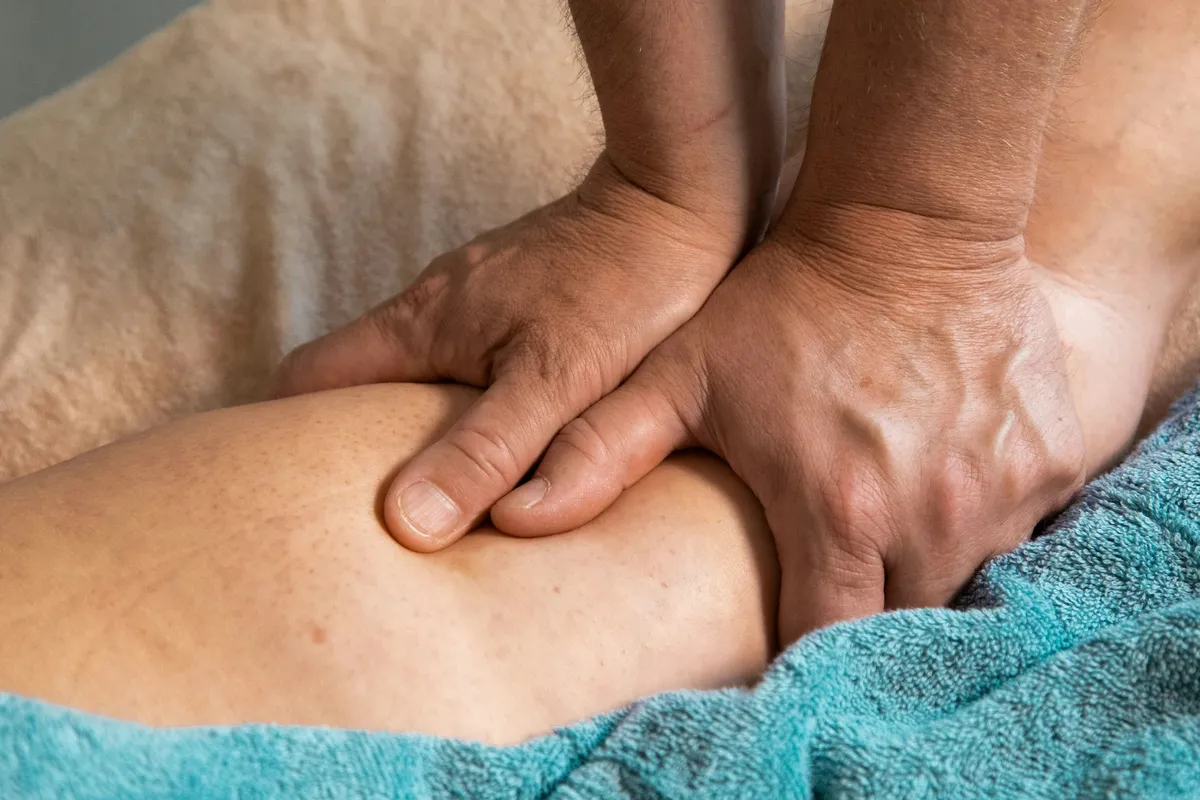
Deep tissue work is firm, and you'll feel parts of it. But you should never have to brace yourself. The pressure stays at a level you can breathe through, and Jonathan adjusts as he goes.
Neither of you can know before you start whether one will be enough. Something that has been there for years usually takes three to six: weekly at first, then spaced out as it improves. You'll get an honest view at the end of the first session, not a package sold up front.
Shorts, and a vest or t-shirt if the problem is in the upper body. Come as you would to train.
It's targeted soft tissue work, not a spa treatment. If something needs a diagnosis, a scan or a prescription, Jonathan will tell you and point you to the right person rather than work around it.
No. It's actually the most common situation: something you've put up with for months or years, rested, stretched, and had worked on somewhere that helped for about two days. How long you've had it matters less than what's causing it, and finding that out is what the first session is for. Something long-standing usually takes three to six sessions, not one.
Still not sure it's right for you? That's what the call before a first session is for. It takes fifteen minutes, and it's with Jonathan, not a receptionist.
Book a first session