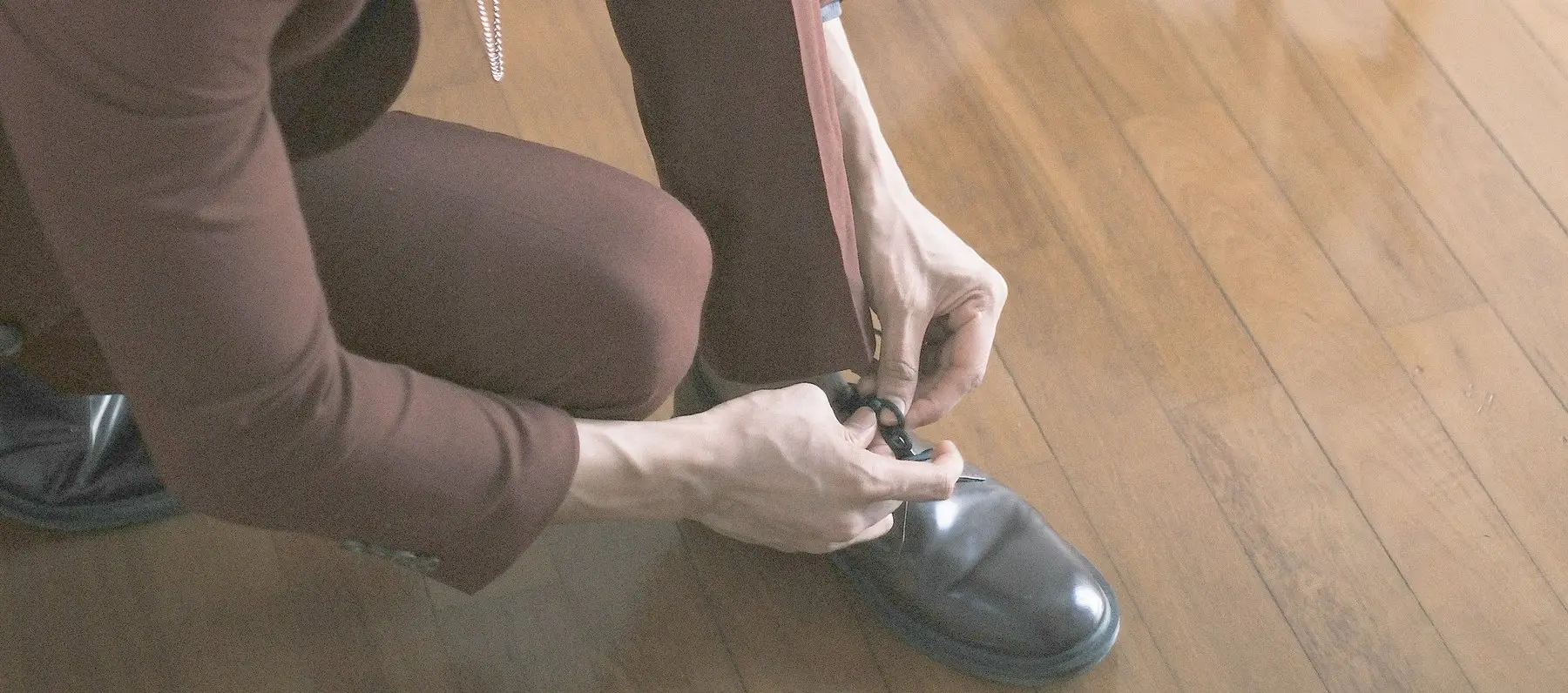
The lower back, and the
five things it has quietly
taken off your list
You started thinking about it before picking something off the floor. Nobody decides that. It just arrives.
You started thinking about it before picking something off the floor. Nobody decides that. It just arrives.
Almost every first appointment in the country opens by asking how bad it is, out of ten. You have probably answered it before. The trouble is that the answer changes almost nothing about the hour that follows.
What changes the hour is which movements have gone. A movement is checkable in a way a number is not: it either happens or it does not, you can watch it happen, and it can be looked at again later without anybody having to remember what they said last time. Two people who both say seven are not in the same trouble. Two people who have both stopped bending to the floor are in something much more alike.
And the boundary is the same here as everywhere else on this site: if it turns out to need a diagnosis, a scan or a prescription, Jonathan will say so and point you to the person who can, rather than work around it.
Five ordinary movements. Tick the ones that have quietly become something you plan rather than something you do, and each one says what it actually asks of a back.
What it asks
Where the hour starts
What it asks
Where the hour starts
What it asks
Where the hour starts
What it asks
Where the hour starts
What it asks
Where the hour starts
Tick the ones that are true. Nothing is stored and nothing is sent. The list is for you to read, and to bring.
This is a description of five movements, not a reading of your back. Which of them is worth anything in your case is what the first session is for, and anything needing a scan or a prescription gets pointed at the right person rather than worked around.
What it asks. Bending and rotating at once, with no weight on it at all. It is often the first thing to go, and the last thing anybody thinks to mention.
Where the hour starts. Whether the hip has the turn in it. If it does not, the turn still happens, somewhere further up.
What it asks. One bend, divided between the hip and the back. The thinking beforehand is the part worth saying out loud.
Where the hour starts. How that bend is currently being divided, rather than how it is supposed to be.
What it asks. Rotation with the hip taken out of it. Keeping the legs together removes the joint that would otherwise supply the turn.
Where the hour starts. The glutes, and the sitting that came immediately before the turn was asked for.
What it asks. Nothing at all, and that is the problem. One position, held long enough that the front of the hip stops offering any length.
Where the hour starts. What has shortened at the front, rather than what is aching at the back.
What it asks. Hours in a position you cannot correct, because you are not awake to correct it.
Where the hour starts. Where the tension sits at rest, which is not always where it sits under load.
Every one you have ticked is a movement the hip supplies. That is a fact about these five movements rather than about your back, and it is why the hour tends to start below the place that hurts.
I was suffering from severe lower back pain to the point where I could barely walk. Every movement was painful, and it was affecting every part of my daily life.
Review 01 of 03
Which is why the hour rarely starts where the ache is. One room, one pair of hands, and an hour that begins by working out where the movement actually went.
Book a sessionNo, and it is the ordinary case rather than the awkward one. Most people arrive able to point at where it hurts and not much else, which is what the first ten minutes are actually for. The list is there to give you something more useful than a number if you happen to have it, not to set an entry requirement.
Possibly, and Jonathan is the one who will say so. He is not a physiotherapist, and this is soft tissue work, one-to-one. If what you have turns out to need a diagnosis, a scan or a prescription, he will tell you and point you at the right person rather than keep you on the table.
Yes. Two of the five movements above are a chair rather than a gym, and sitting volume is one of the two things the practice's own notes name behind a lower back. If the neck and the shoulder are in it as well, the desk page is the closer fit and it argues the seated case properly.
Both, and in that order. The practice's own description of what happens with a lower back is that the hips and glutes get assessed first, then the lumbar region is released and the real driver addressed. Nobody comes in with a sore back and gets an hour that never touches it.
Some of it can, and it is worth saying that plainly rather than promising otherwise. Deep work on something that has been guarded for a while is uncomfortable at the time. What is not on is you gritting your teeth through an hour in silence: it is one-to-one, he is asking as he goes, and the pressure is a conversation rather than a setting.
That is worth bringing, and it is one of the more useful things you can say. What was worked on, for how long, and whether anything changed for a day or two afterwards all narrow the hour down. It is also the reason the question at the top of this page is which movements have gone rather than how bad it is: an hour spent on the sore part is exactly what a lot of people have already bought.
Bring the list. Which movements have gone is the first thing he would ask for anyway, and it is quicker to say than it is to describe where it hurts.
Book a sessionOr start from the situation rather than the sport: something already hurts, or nothing hurts yet.